The song that we now know as Jingle Bells was originally titled "One Horse Open Sleigh". It was written in 1857 by James Lord Pierpont.
The chorus and the first verse are the most sung and best known part of the song.
Dashing through the snow
In a one horse open sleigh
O'er the fields we go
Laughing all the way
Bells on bob tails ring
Making spirits bright
What fun it is to laugh and sing
A sleighing song tonight

Oh, jingle bells, jingle bells
Jingle all the way
Oh, what fun it is to ride
In a one horse open sleigh
Jingle bells, jingle bells
Jingle all the way
Oh, what fun it is to ride
In a one horse open sleigh
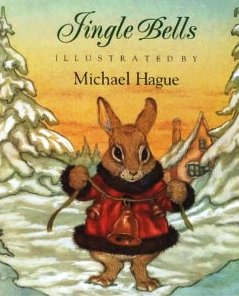
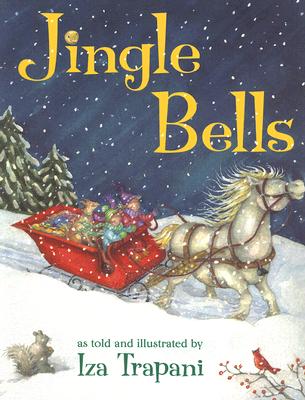
The song has also inspired many illustrators. You can find an illustrated version of Jingle Bells that calls to you and your child.
Related Activites:
Make Jingle Bells.....
These simple bells made of egg cartons, pipe cleaners and jingle bells were found at Fantastic Fun and Learning.com check here for full directions
For a fancy wearable Jingle Bell Bracelet, use almost the same materials minus the egg carton and add a few fancy pipe cleaners. Spoonful .com has directions for three versions including the one below:
Wednesday, March 9, 2011 is World Read Aloud Day.
WRAD was started by LitWorld.
LitWorld is an international non-profit organization, whose goal is to
"...cultivate literacy leaders worldwide through transformational literacy experiences that build connection, understanding, resilience and strength. We work with teachers, parents, community members, and children to support the development of literacy and the redemptive power of story in the world's most vulnerable communities."
All over the U.S. there are groups and individuals planning reading activities. LitWorld is even hosting a 24-Hour Read-Aloud Marathon all day on March 9 in Times Square. Check your area to see if there are any activities planned or plan youe own World Read Aloud Day celebration.
Check out some of my previous blogs for book ideas and activities.
LitWorld's Reading Decree(this statement is found on LitWorld's Blog to be used by anyone hosting a WRAD event)
Today is World Read Aloud Day. We are uniting our voices in cities and communities across the globe. We celebrate the power of stories and words to change worlds. We join our voices for quality literacy education for every child worldwide. Today 774 million people cannot read or write. They are denied the joy and light of reading every day. Education is a human right and a means to attaining other human rights that we declare to be universal. Literacy education improves the health of children and families, spurs economic growth and advances equality. For many children worldwide, quality education is the difference between life and death, between hope and despair and being able to make the most of one’s potential. This is our opportunity to give voice to the future. By coming together and raising our voices on this day, we show the world’s children that we support their lives: that they have the right to read, to write and to share their stories to change the world. Today I pledge my passion for quality education and my support for the cause of literacy. I encourage everyone to take part in this day and this cause. As a representative of my community, I will continue to advocate for the causes most important to us and I encourage all of you to join me in the fight for our children and all children’s futures.
In observance of World Read Aloud Day, I invite you to take a moment to think about what you would miss most if you could not read or write.
It’s time for all of us to join the global literacy movement. Through our voices we can be free and be part of words changing worlds.
Today's Book Look is Will Hillabrand's Here We Go Round the Mulberry Bush.
Yesterday's Musical Monday featured the Mulberry Bush song. Today's book takes that same song and expands it into a fun, musically book about a pig's first day in school.
This rhyming story is set to the tune of "Here We Go Round the Mulberry Bush". It's the first day of school and little pig is scared. He can't quite get the hang of things at school and ends up making messes. When the other pigs go outside to play, he hides inside a mulberry bush. There he finds another little pig hiding also. Read the book to find out what happens next! (Hint - the two become friends)
This is a great first day or week of school book to read to kids. After reading the book and learning the tune, the children can have fun playing the game (check the Musical Monday blog).
Creative Writing - The author of this book took a simple song and made it into a story while staying true to the song, more or less. Have your kids pick their favorite song or nursery rhyme and either add new lyrics or make up a story around the rhyme.
I chose this Tuesday's book because July is National Hot Dog Month and July 19th is National Hot Dog Day. The Pigeon Finds a Hot Dog! was written and illustrated by Mo Willems.
Pigeon, the star of Don't Let the Pigeon Drive the Bus and four other books, finds a yummy looking hot dog which he plans to eat all by himself. But a very cute, curious, annoying and tenacious duckling has other ideas.
While you may not know, author Mo Willems name, you very likely have seen his work. He was a writer and animator for Sesame Street, created two animated series for the Cartoon Network and was the head writer for their Codename: Kids Next Door series. Three of his books have received Caldecott Honors and Mo Willems is the creator of the Knuffle Bunny Books.
Okay, I worked really hard trying to find interesting craft ideas for this book that were about more than just cooking hot dogs....I kinda succeeded , sorta, cooking is involved in these activities but they involve a lot of creativity, also.
Hot Dog People
To make Hot Dog people you'll need - hot dogs, plastic knives and a microwave
give each child an uncooked hot dog and a knife
the kids then use the knife to make slices in the hotdog to resemble body parts (slices at the top for hair, a face, a slice on each side for arms and a slice in the middle of the bottom, to make two legs).
Then cook the hot dog in the microwave for about 25 - 30 seconds.
As the hot dog cooks, it should begin to look more like a person.
Read or act out the story of the 3 Pigs and then make Pigs in a Blanket (recipe and story here) Here's an easy recipe for a Hot Dog and Fries cake using a loaf cake, Twinkies and icing.
Time to fire up the grill, grab some sparklers and , of course, make a few fun, fabulous and fast Fourth of July crafts!
Oh, and read a few books about the Fourth, also.( I've placed links to 9 interesting books about the Fourth of July ,appropriate for a variety of age levels, at the end of this blog.)
Let's get started on those crafts.....
Coffee Filter Fireworks - You need: Washable Markers, Coffee Filters, Spray Bottle (optional), Water - Flatten out the coffee filter; Spritz with water or sprinkle on water; only Dampen the filter DO NOT Soak it! ; Use the markers to draw on the damp filter; the water will cause the colors to spread and give a tie dye or fireworks effect
Make a Fireworks Tshirt - you'll need: a tshirt, glitter fabric paint, newspaper
To make your T-shirt - lay the shirt on a flat surface; place folded newspaper between the t-shirt layers to keep the paint from bleeding through; use the glitter paint to draw, free-hand, bursts of fireworks; follow manufacturers directions to dry and wash the t-shirt
June 4th is National Donut Day.
According to wikipedia:
National Donut Day is on the first Friday of June each year and follows on the Donut Day event created by the Salvation Army in 1938 to honor the women who served donuts to soldiers during World War. The holiday celebrates the doughnut (a.k.a "donut") — an edible, ring-shaped piece of dough which is deep-fried and sweetened.
In honor of National Donut day, I've naturally chosen a book about a donut. Arnie the Doughnut was written by Laurie Keller. It's a really fun and silly book that the kids will love. Here's the official book description:
Arnie is proud to be chocolate-covered, with bright-colored candy sprinkles. His first day on the planet is a big one. He is 1) cut into a ring 2) deep-fried 3) cooled 4) iced 5) sprinkled and 6) named Arnie. What he doesn't realize is that step 7 is being eaten by a human. So, when a customer, Mr. Bing, starts to put him in his mouth, he screams, "What are you doing?" Arnie is further crushed when he calls the bakery to warn the others only to discover that all the other pastries are "aware of this arrangement."
As you can see, Arnie is just the book to read on doughnut day. The kids will love the idea of a doughnut that doesn't want to be eaten.
The perfect activity to accompany this book is, of course, making doughnuts. The simplest way to make "donuts" with kids is to make Biscuit Donuts. I've made these with kids numerous times and they are always a big hit.
This is a good video about making Biscuit Doughnuts. A recipe follows the video.
Biscuit Doughnuts
ingredients:
2 cans of large buttermilk biscuits
oil for frying doughnuts
cinnamon sugar, sprinkles or icing to decorate
Directions:
Heat 2 inches peanut oil in a large pot or Dutch oven to 350 degrees F.
Lay out the biscuits on a cutting board
With a cookie or biscuit cutter, cut out a hole from the middle of each biscuit.
Fry the biscuit/donuts in the oil until golden. Use tongs to flip the donuts over.
Don't forget to fry the donut holes.
Drain the donuts and the holes on paper towels
Now you can sprinkle the donuts and holes with cinnamon sugar or put icing on them and decorate with sprinkles.
May is National Salad Month! (yep, we're almost finish with May holidays). This Tuesday's book is "I don't Like Salad!" a book written by Tony Ross. It is also linked with a tv show called Little Princess. No, I have never heard of the show either but the book is cute. It's official synopsis says:
The Little Princess has decided she doesn't like salad - especially tomatoes. But when she is given some seeds of her own and sees the first shoots of her tomato plant appear, she changes her mind!
The little Princess's attitude is one that a lot of kids and some adults will sympathize with. But in the end we all know (sorta) that veggies are good for you. I agree with the premise of the book that planting seeds and watching them grow is a good way to get kids to try a variety of veggies. Cooking is also a good way to get kids involved in what they eat.
I've given a recipe below for a salad, linked to another of my blogs that has a cute salad story and recipe and given a vid on making a salad with a fun name.
Ingredients:
1 cup granny smith apples, chopped
1 tablespoon lemon juice
1 cup celery, chopped
1/4 cup mayonnaise
1/4 cup raisins
1/4 cup walnuts
Directions:
1. Sprinkle chopped apples with lemon juice and mix together..
2. Add celery, raisins and walnuts.Stir together.
3. Add mayonnaise and stir, coating all of the ingredients.
4. Serve chilled.
May is National Photography or Photo Month. (yes, another holiday) Since the month is fast getting away from me, I'm putting up a ....Tada!...Friday Book Look! Click: A Book About Cameras and Taking Pictures was written by Gail Gibbons.
According to School Library Journal:
Gibbons takes a complex subject and breaks it down into simple, easy to understand terms. She describes different types of cameras and their film, and explains what happens to film inside the camera and at a photo-processing center. At this point, the author states, "First the film is removed from the cartridge in a darkroom, lit only by a red light. Then the latent images on the film are developed by soaking the film in chemicals." In fact, film must be removed in total darkness or it will be ruined; a red light will erase latent images. Explanations of printing, negatives and enlargements, tips on the care of a camera and on taking photos both indoors and outdoors are provided. A very basic chronology on the history of photography completes the presentation.
This book is a perfect lead up to making a Pinhole Camera.
Kids love to take pictures. There are many types of throwaway cameras available for children to experiment with. There are even cameras made especially for children. But a fun and educational way to learn about cameras and picture taking is to make a Pinhole Camera. A pinhole camera is a very simple camera with no lens that lets light in through a small pinhole which is what makes the picture. For the history and some of the science of Pinhole Cameras check with wikipedia.
A pinhole camera can be made with recycled materials that you have at home. If you really want to make a pinhole camera that will take a picture then you will need a few special materials:Resin-coated 5x7 inch black and white photographic paper, developing liquid and fixer. Because of the chemicals this is not a project that small children can do for themselves. For the special photography supplies check your local photography or hobby shop.
While a pinhole camera is basically a box with a tiny hole, there are many ways to make the camera. Here are a number of links showing different ways to assemble the camera. Highlight Magazine's Pinhole Camera is very simple and best for young children.
May is National Salsa Month, really, so I thought a book about salsa would be appropriate this Tuesday. Chicks and Salsa written by Aaron Reynolds is a fun, colorful book that makes you laugh and makes you hungry.
According to the School Journal:
"Farmer Nuthatcher's chickens are tired of their regular feed, and it just so happens that the rooster has been watching cooking shows over the farmer's wife's shoulder. He has some ideas, beginning with chips and salsa. Soon the ducks are inspired and give up fish for guacamole, and the pigs go for beans and chiles. With all of this southwestern cuisine, it's time for a fiesta. It turns out, though, that Mrs. Nuthatcher is making tamales, and all of the ingredients the animals need are gone, so it's time for a new cuisine–from a French cookbook."
The book is even more fun than it sounds and the pictures are wonderful. There are also three recipes at the end of the book...Hog Wild Nachos, Quackamole and Rooster's Roasted Salsa. All three sound delicious.
Here's a Super Simple Salsa Recipe for you to start cooking right now:
you'll need...
1 clove garlic
2 green onions
28 oz can chopped tomatoes, drained (reserve 1 Tbsp of the juice)
1 Tbsp lemon juice (or squeeze 1/2 a fresh lemon)
chopped fresh cilantro leaves (the amount depends on you taste)
salt and pepper to taste
Directions:
Mince together by hand or in a food processor , the garlic and the onions.
Add the tomatoes, the Tbsp of tomato juice, the Tbsp of fresh lemon juice, the cilantro leaves and the salt and pepper to taste.
Mix together or pulse lightly in the food processor. Do not over process.
Since April is National Frog Month I decided that this Tuesday's Book Look book would be Frog On His Own by Mercer Mayer
Frog on His Own is a wordless picture book . It'ss the 4th in a series of 5 books.
A Boy, a Dog, and a Frog, the first book in this series, was the beginning of Mercer Mayer's long and illustrious career over twenty-five years ago. It is also one of the books that began the wordless picture book genre.
In this book, the boy and his animal friends go to the park. Some how frog gets separated from his friends and he manages to get into all kinds of situations.
This a great book for kids to "read" to themselves or for you to read/describe to the children.
The complete list of books in the series is:
# A Boy, a Dog and a Frog (1967)
# Frog, Where Are You? (1969)
# A Boy, a Dog, a Frog, and a Friend (1971)
# Frog on His Own (1973)
# Frog Goes to Dinner (1974)
# One Frog Too Many (1975)
Go to my Storytelling Crafts and Kids blog to read a wonderful Japanese folktale about frogs and learn to make Origami Hopping Frogs.
Five Green and speckled frogs,
Sat on a speckled log,
Eating some most delicious bugs,
Yum, Yum.
One jumped in the pool,
Where it was nice and cool,
Now there are four green speckled frogs,
Glub, glub.
Four Green and speckled frogs,
Sat on a speckled log,
Eating some most delicious bugs,
Yum, Yum.
One jumped in the pool,
Where it was nice and cool,
Now there are three green speckled frogs,
Glub, glub.
Three Green and speckled frogs,
Sat on a speckled log,
Eating some most delicious bugs,
Yum, Yum.
One jumped in the pool,
Where it was nice and cool,
Now there are two green speckled frogs,
Glub, glub.
Two Green and speckled frogs,
Sat on a speckled log,
Eating some most delicious bugs,
Yum, Yum.
One jumped in the pool,
Where it was nice and cool,
Now there is one green speckled frog,
Glub, glub.
(sing the last verse very quickly)
One Green and speckled frog,
Sat on a speckled log,
Eating some most delicious bugs,
Yum, Yum.
One jumped in the pool,
Where it was nice and cool,
Now there are (slow down and sing sadly) no green speckled frogs,
Glub, glub.
Bloop Bloop
Bloop bloop went the little green frog one day,
Bloop bloop went the little green frog,
Bloop bloop went the little green frog one day,
And they all went bloop bloop bloop!
Weeeee all know frogs go,
Lahdeedahdeedum!
Lahdeedahdeedum!
Lahdeedahdeedum!
We all know frogs go,
Lahdeedahdeedum!
They don't go bloop bloop bloop!
Five Little Tadpoles
Five little tadpoles swimming near the shore.
The first one said, “Let’s swim some more.”
The second one said, “Let’s rest awhile.”
The third one said, “Swimming makes me smile.”
The fourth one said, “My legs are growing long.”
The fifth one said, “I’m getting very strong.”
Five little tadpoles will soon be frogs.
They’ll jump from the water and sit on logs.
Today is the Storytelling Sub's first Book Look. I've decided to dedicated a couple of Tuesdays a month...note I haven't mentioned which ones or how many, yet...to a blog on the great books that are out there. Each blog will pick a book, give a quick synopsis and an activity that is related to the story. I figure that there are sooooo many books out there that I could do this forever.
This Tuesday's Book Look is about the book Johnny Appleseed by Jane Yolen. There are many, many, many books for children about Johnny Appleseed and you can pick whichever you wish but I happen to like this one by Jane Yolen although Steven Kellog's version is also a fave. It also happens that Thursday, March 11th is Johnny Appleseed Day.
Jane Yolen's Johnny Appleseed The Legend and The Truth does just as the title indicates. It tells the story of the legend of Johnny Appleseed, in verse, while giving the facts of his life on each page just under the verse. The books reading level is rated for ages 4 to 8 years.
Just to tell you a little about the books subject without giving away the whole book: Johnny Appleseed (September 26, 1774 – February 18, 1845)was born John Chapman. He was an American pioneer who introduced apple trees to large parts of Ohio, Indiana, and Illinois. Johnny was born on a small farm in Massachusetts. He headed west when he turned 18. Many believe that he planted apple seeds haphazardly but, in fact, Johnny planted with a plan. To learn more about Johnny Appleseed, read one of the many books about him.
I was going to put a directions for Apple Printmaking but I found a site , Make and Takes, with wonderful directions and pictures.
Ooooo....another apple favorite is Apple Smiles. you'll need: an apple (read apples look more mouth like but any type of apple will do), cut into wedges peanut butter or Nutella miniature marshmallows plastic knives paper plates
how to: 1. Give each child 2 apple wedges, a plastic knife and a few marshmallows 2. Have the child smear peanut butter or nutella on one side of one of the apple wedges. 3. Place a few marshmallows on the peanut butter/nutella side of the apple wedge like teeth. 4. Smear peanut butter/nutella on one side of the other apple wedge. 5. Place this apple wedge on top of the marshmallows. 6. You now should have an apple smile.
This is the "Johnny Appleseed" song from the Disney movie.
Oh, the Lord's been good to me. And so I thank the Lord For giving me the things I need: The sun, the rain and the appleseed; Oh, the Lord's been good to me.
Oh, and every seed I sow Will grow into a tree. And someday there'll be apples there For everyone in the world to share. Oh, the Lord is good to me.
Oh, here I am 'neath the blue, blue sky Doing as I please. Singing with my feathered friends Humming with the bees.
I wake up every day, As happy as can be, Because I know that with His care My apple trees, they will still be there. The Lord's been good to me.
I wake up every day As happy as can be, Beacuse I know the Lord is there Watchin' over all my friends and me The Lord is good to me.
-----SPANISH-----
Dios se acordó de mí, Y a El le agradeezco Porque me dio Un Corazón Y asî amar su creación, Dios se acordó de
Stories and Music offer lots of opportunities to teach and learn.
The song "Over in the Meadow", which is also in book form (many many books), offers many chances to do simple math, everything from simply counting the animals to adding and/or subtracting animals. And, if you're really ambitious you can do a little science, studying the different animals and their habitats.
Be sure to check out the links at the end of the blog for worksheets and other fun stuff.
OVER IN THE MEADOW was written by Olive A. Wadsworth in the 1800s Copyright Unknown
Over in the meadow,
In the sand in the sun
Lived an old mother toadie
And her little toadie one
"Wink!" said the mother;
"I wink!" said the one,
So they winked and they blinked
In the sand in the sun
Over in the meadow,
Where the stream runs blue
Lived an old mother fish
And her little fishes two
"Swim!" said the mother;
"We swim!" said the two,
So they swam and they leaped
Where the stream runs blue
Over in the meadow,
In a hole in a tree
Lived an old mother bluebird
And her little birdies three
"Sing!" said the mother;
"We sing!" said the three
So they sang and were glad
In a hole in the tree
Over in the meadow,
In the reeds on the shore
Lived an old mother muskrat
And her little ratties four
"Dive!" said the mother;
"We dive!" said the four
So they dived and they burrowed
In the reeds on the shore
Over in the meadow,
In a snug beehive
Lived a mother honey bee
And her little bees five
"Buzz!" said the mother;
"We buzz!" said the five
So they buzzed and they hummed
In the snug beehive
Over in the meadow,
In a nest built of sticks
Lived a black mother crow
And her little crows six
"Caw!" said the mother;
"We caw!" said the six
So they cawed and they called
In their nest built of sticks
Over in the meadow,
Where the grass is so even
Lived a gay mother cricket
And her little crickets seven
"Chirp!" said the mother;
"We chirp!" said the seven
So they chirped cheery notes
In the grass soft and even
Over in the meadow,
By the old mossy gate
Lived a brown mother lizard
And her little lizards eight
"Bask!" said the mother;
"We bask!" said the eight
So they basked in the sun
On the old mossy gate
Over in the meadow,
Where the quiet pools shine
Lived a green mother frog
And her little froggies nine
"Croak!" said the mother;
"We croak!" said the nine
So they croaked and they splashed
Where the quiet pools shine
Over in the meadow,
In a sly little den
Lived a gray mother spider
And her little spiders ten
"Spin!" said the mother;
"We spin!" said the ten
So they spun lacy webs
In their sly little den
This is a lovely version using John Langstaff's book illustrations.
There are many versions of this song, some in book form.
Here's another version to use or you can have fun making up your own version with animals your children may know.
Over in the meadow
In the sand in the sun, lived an
Old mother turtle and her
Little turtle one.
"Dig," said the mother,
"I dig," said the one, and they
Dug all day in the sand in the sun.
Over in the meadow where the
Stream runs blue, lived an
Old mother fish and her
Little fishies two.
"Swim," said the mother,
"We swim," said the two, and they
Swam all day where the stream runs blue.
Over in the meadow in a hole in the tree,
Lived an old mother owl and her
Little owls three.
"Whoo," said the mother,
"We whoo," said the three, and they
Whooed all day in the hole in the tree.
Over in the meadow by the old barn door,
Lived an old mother rat and her
Little ratties four.
"Gnaw," said the mother,
"We gnaw," said the four, and they
Gnawed all day on by the old barn door.
Over in the meadow in a snug beehive,
Lived an old mother bee and her
Little bees five.
"Buzz," said the mother,
"We buzz," said the five, and they
Buzzed all day in the snug beehive.
Over in the meadow in a nest built of sticks,
Lived an old mother crow and her
Little crows six.
"Caw," said the mother,
"We caw," said the six, and they
Cawed all day in the nest built of sticks.
Over in the meadow where the grass grows so even,
Lived an old mother frog and her
Little froggies seven.
"Jump," said the mother,
"We jump," said the seven, and they
Jumped all day where the grass grows so even.
Over in the meadow by the old mossy gate,
Lived an old mother lizard and her
Little lizards eight.
"Bask," said the mother,
"We bask," said the eight, and they
Basked all day by the old mossy gate.
Over in the meadow by the old scotch pine,
Lived an old mother duck and her
Little duckies nine.
"Quack," said the mother,
"We quack," said the nine, and they
Quacked all day by the old scotch pine.
Over in the meadow in a cozy, wee den,
Lived an old mother beaver and her
Little beavers ten.
"Beave," said the mother,
"We beave," said the ten, and they
Beaved all day in their cozy, wee den.