The song that we now know as Jingle Bells was originally titled "One Horse Open Sleigh". It was written in 1857 by James Lord Pierpont.
The chorus and the first verse are the most sung and best known part of the song.
Dashing through the snow
In a one horse open sleigh
O'er the fields we go
Laughing all the way
Bells on bob tails ring
Making spirits bright
What fun it is to laugh and sing
A sleighing song tonight

Oh, jingle bells, jingle bells
Jingle all the way
Oh, what fun it is to ride
In a one horse open sleigh
Jingle bells, jingle bells
Jingle all the way
Oh, what fun it is to ride
In a one horse open sleigh
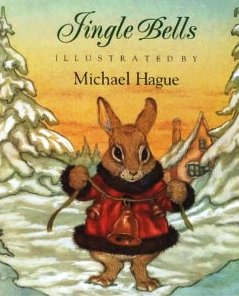
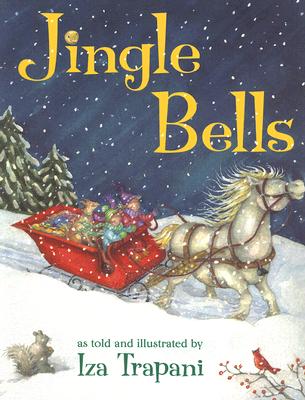
The song has also inspired many illustrators. You can find an illustrated version of Jingle Bells that calls to you and your child.
Related Activites:
Make Jingle Bells.....
These simple bells made of egg cartons, pipe cleaners and jingle bells were found at Fantastic Fun and Learning.com check here for full directions
For a fancy wearable Jingle Bell Bracelet, use almost the same materials minus the egg carton and add a few fancy pipe cleaners. Spoonful .com has directions for three versions including the one below:
"This old man he played one. He played knick knack on my thumb. With a knick knack paddy whack, give a dog a bone, this old man came rolling home!"
This Old Man is a very popular nursery rhyme.
It's fun to sing or chant, focuses on rhyming and counting and has been used as the basis for many picture books.
Below is the video version of the book Knick Knack Paddy Whack by Christiane Engel.
Knick-Knack Paddy Whack aka This Old Man Activities:
Make a Song Rebus for This Old Man. Check this one at Enchanted Learning
Rhyming Words: Point out the rhyming words in the song. Notice the difference in the rhymes used in the traditional version of the song and the rhymes used in the video version. Have the children make up their own number rhymes.
Expand the Rhyme: Make up rhymes up to the number 20 and beyond.
Make up a Story and Act it out: Why is the Old Man playing one...etc? What happens when he is finished?
Read a Different version of the song: Get a copy of This Jazz Man by Karen Ehrhardt. Ehrhardt's "old man" really swings the song. Here's an example:
"This jazz man, he plays one, He plays rhythm with his thumb, With a snap! snap! snazzy-snap! Give the man a hand, This jazz man scats with the band."
The lyrics below are just one version of This Old Man:
This old man, he played one
He played knick-knack on my thumb
With a knick-knack patty-whack, give a dog a bone
This old man came rolling home
This old man, he played two
He played knick-knack on my shoe
With a knick-knack patty-whack, give a dog a bone
This old man came rolling home
This old man, he played three
He played knick-knack on my knee
With a knick-knack patty-whack, give a dog a bone
This old man came rolling home
This old man, he played four
He played knick-knack on my door
With a knick-knack patty-whack, give a dog a bone
This old man came rolling home
This old man, he played five
He played knick-knack on my hive
With a knick-knack patty-whack, give a dog a bone
This old man came rolling home
This old man, he played six
He played knick-knack on my sticks
With a knick-knack patty-whack, give a dog a bone
This old man came rolling home
This old man, he played seven
He played knick-knack up in heaven
With a knick-knack patty-whack, give a dog a bone
This old man came rolling home
This old man, he played eight
He played knick-knack on my gate
With a knick-knack patty-whack, give a dog a bone
This old man came rolling home
This old man, he played nine
He played knick-knack on my spine
With a knick-knack patty-whack, give a dog a bone
This old man came rolling home
This old man, he played ten
He played knick-knack once again
With a knick-knack patty-whack, give a dog a bone
This old man came rolling home
This is a song/poem that I learned while working at a summer camp in Alaska.
I researched it and as far as I can tell the song to be of unknown origins.
It's a great song for kids about diversity and tolerance.
I wish I could sing it for you but it would work as a sort of up tempo chant. Experiment with it.
I"m Proud to be Me
I'm proud to be me but I also see
You're just as proud to be you.
We might look at things a bit differently
But lots of good people do.
That's just human nature
So why should I hate you
For being as human as I?
We get what we give.
If we live and let live
We'll both get along if we try.
I'm proud to be me, and I also see
You're just as proud to be you.
School days , school days, good old golden rule days!
No, that's not one of the three songs but it seemed appropriate.
The beginning of the new school year is almost here and it's time for teacher's to jazz up those lesson plans and for parents to get the kids ready for school, especially, the little ones who are just starting school.
I've found three fun songs to help get the little ones excited about school, really.
The first song is really cute and sung to the tune of Zip-a-dee-doo-dah from Disney's Song of the South. This song is just too cute and a great song to teach your child a few weeks before they start school. You can also change the lyrics a little and continue to use the song throughout the year. You could, for instance, change that second line of the first verse to...."I'm going to school and I'll have a great day!" Nothing like starting the day with a positive thought.
My second song is a classic nursery rhyme/song. Most of us know the song Mary Had A Little Lamb, but did you know that according to Wikipedia:
The nursery rhyme was first published (as opposed to written) by the Boston publishing firm Marsh, Capen & Lyon, as an original poem by Sarah Josepha Hale on May 24, 1830, and was inspired by an actual incident.
In the 1830s, Lowell Mason set the nursery rhyme to a melody adding repetition in the verses:
Mary had a little lamb,
little lamb, little lamb,
Mary had a little lamb,
whose fleece was white as snow.
And everywhere that Mary went,
Mary went, Mary went,
and everywhere that Mary went,
the lamb was sure to go.
It followed her to school one day
school one day, school one day, It followed her to school one day,
which was against the rules.
It made the children laugh and play,
laugh and play, laugh and play,
it made the children laugh and play
to see a lamb at school.
And so the teacher turned it out,
turned it out, turned it out,
And so the teacher turned it out,
but still it lingered near,
And waited patiently about,
patiently about, patiently about,
And waited patiently about
till Mary did appear.
"Why does the lamb love Mary so?"
Love Mary so? Love Mary so?
"Why does the lamb love Mary so,"
the eager children cry.
"Why, Mary loves the lamb, you know."
The lamb, you know, the lamb, you know,
"Why, Mary loves the lamb, you know,"
the teacher did reply.
Follow up activities for Mary Had A Little Lamb:
Have the kids change the rhyme and put in their name and their own pet or favorite animal.
Then have the kids think up rhymes for their name and animal.
Illustrate and write out each child's poem/song.
My third song is On the Way to School. Unfortunately, I can't show you the tune for the song but you can makeup your own simple tune.
On The Way to School
What a lot of things to see,
On the way to school!
Chipmunks running up a tree,
On the way to school.
Sparrows busy building nests,
Robins smoothing down their vests,
What a lot of things to see,
On the way to school!
What a lot of things to hear,
On the way to school!
Someone whistling loud and clear,
On the way to school.
Workmens' hammers go bang, bang!
Fire engines go clang, clang!
What a lot of things to hear,
On the way to school!
What a lot of things to do,
On the way to school!
Act like monkeys at the zoo,
On the way to school!
Jump in puddles, climb a tree,
Cross the street so carefully,
What a lot of things to do,
On the way to school!
Follow up activity: Have the kids make up their own verses for this song. Ask them what they see, hear or do on their way to school or what they would like to see. hear or do.....possibly a loaded question.
Today's Book Look is Will Hillabrand's Here We Go Round the Mulberry Bush.
Yesterday's Musical Monday featured the Mulberry Bush song. Today's book takes that same song and expands it into a fun, musically book about a pig's first day in school.
This rhyming story is set to the tune of "Here We Go Round the Mulberry Bush". It's the first day of school and little pig is scared. He can't quite get the hang of things at school and ends up making messes. When the other pigs go outside to play, he hides inside a mulberry bush. There he finds another little pig hiding also. Read the book to find out what happens next! (Hint - the two become friends)
This is a great first day or week of school book to read to kids. After reading the book and learning the tune, the children can have fun playing the game (check the Musical Monday blog).
Creative Writing - The author of this book took a simple song and made it into a story while staying true to the song, more or less. Have your kids pick their favorite song or nursery rhyme and either add new lyrics or make up a story around the rhyme.
I love a good circle game! Here We Go Round the Mulberry Bush is a very old nursery rhyme/song.
According to Wikipedia:
The rhyme (Mulberry Bush) is first recorded as a children's game by James Orchard Halliwell in the mid-nineteenth century.He also noted that there was a similar game with the lyrics 'Here we go round the bramble bush'. Some commentators believe that the bramble bush was the earlier version, and perhaps changed because of the difficulty of articulating the alliteration, not least because mulberries do not grow on bushes.
Halliwell noted that subsequent verses included: 'This is the way we wash our clothes', 'This is the way we dry our clothes', 'This is the way we mend our shoes', 'This is the way the gentlemen walk' and 'This is the way the ladies walk'.
These are the traditional words and activities for Mulberry Bush. As a circle game the children hold hands and go around in a circle during the chorus. During the different verses they stop and act out the verse.
Here we go round the mulberry bush
The mulberry bush, the mulberry bush
Here we go round the mulberry bush
So early in the morning
This is the way we wash our clothes
Wash our clothes, wash our clothes
This is the way we wash our clothes
So early Monday morning
This is the way we iron our clothes
Iron our clothes, iron our clothes
This is the way we iron our clothes
So early Tuesday morning
This is the way we mend our clothes
Mend our clothes, mend our clothes
This is the way we mend our clothes
So early Wednesday morning
This is the way we sweep the floor
Sweep the floor, sweep the floor
This is the way we sweep the floor
So early Thursday morning
This is the way we scrub the floor
Scrub the floor, scrub the floor
This is the way we scrub the floor
So early Friday morning
This is the way we bake our bread
Bake our bread, bake our bread
This is the way we bake our bread
So early Saturday morning
This is the way we go to church
Go to church, go to church
This is the way we go to church
So early Sunday morning
There are lots of variations to the song: Here we go round the mulberry bush,
The mulberry bush, The mulberry bush.
Here we go round the mulberry bush
On a cold and frosty morning.
For a school song you might use the verses: This is the way we go to school,
Go to school, go to school,
This is the way we go to school,
On a cold and frosty morning.
This is the way we come out of school,
Come out of school, come out of school,
This is the way we come out of school,
On a cold and frosty morning.
The Mulberry Bush song can be used to teach the days of the weeks, good hygiene habits or any other activities that can be explained simply and incorporated into the songs lyrics.
"If you go into the woods today, you're in for a big surprise!"
Okay, maybe not today but July 10th is Teddy Bear's Picnic Day, so beware of teddy bears on the 10th. Or why not celebrate the holiday with your own Teddy and a few friends.
"Teddy Bears' Picnic" is a song consisting of a melody composed by John Walter Bratton in 1907 and lyrics added by British songwriter Jimmy Kennedy in 1932. It remains popular as a children's song, having been recorded by numerous artists over the decades.
In case you don't know the song, here's a really cute version.
If you go down in the woods today
You're sure of a big surprise
If you go down to the woods today
You'd better go in disguise
For ev'ry bear that ever there was
Will gather there for certain, because
Today's the day the teddy bears have their picnic
Ev'ry teddy bear who's been good
Is sure of a treat today
There's lots of marvelous things to eat
And wonderful games to play
Beneath the trees
Where nobody sees
They'll hide and seek as long as they please
That's the way the teddy bears have their picnic
Picnic time for teddy bears
The little teddy bears are having a lovely time today
Watch then, catch them unawares
And see them picnic on their holiday
See them gaily gad about
They love to play and shout
They never have any cares
At six o' clock
Their mummies and daddies
Will take them home to bed
'Cause they're tired little teddy bears
Activities to Celebrate Teddy Bear's Picnic Day
Host a Teddy Bear's Picnic or Tea
Invite the children to bring their Teddy Bears or Significant Stuffed Other to a picnic or tea party
Menu Ideas:
Sandwiches: Peanut Butter and Jelly Triangles (crusts off), Chicken Salad Finger Sandwiches, other Tea Sandwich ideas
a variety of Miniature Muffins
Animal Crackers
Gummi Bears
Slices of Pound and/or Angel cake that the children can decorate and eat with pieces of fresh fruit and fruit syrups
Drinks: Lemonade, Apple Juice, Herbal Sun Tea, Mint Tea Punch (the recipe is at the end of the blog)
Mint Tea Punch
8 mint tea bags
2 quarts boiling water
1 cup sugar
2 ½ cups pineapple juice
1 can (6 ounces) frozen lemonade concentrate, thawed
2 large sprigs fresh mint
In a large glass bowl, steep tea bags and boiling water for 4 minutes.
Oh, John the rabbit ( Yes, Ma’am)
Ya got a mighty bad habit ( Yes, Ma’am)
Jumping in my garden ( Yes Ma’am) Eating all my cabbage (Yes Ma’am)
My sweet potatoes (Yes Ma’am)
My fresh tomatoes ( Yes Ma’am)
And if I live (Yes Ma’am)
To see next fall (Yes, Ma’am)
I ain’t gonna have (Yes Ma’am)
No garden at all ( Yes Ma’am)
John the Rabbit is a traditional African-American folk song. It falls in the category of Call and Response songs. Like echo songs, call and response songs requires the song leader and the group to take turns singing. But unlike echo songs, the group/children's sung response is different from the leader/teacher's part of the song.
This is a good video of kids singing John the Rabbit although you'll note that they have added their own verse in the beginning. The second verse is more like the original, traditional song.
The girls (and the teacher) are singing the "call" and the little boy is singing the "response". They have also added movements which you are always free to do. It makes the song even more fun.
Make a Salad using ingredients mentioned in the song or other vegetables normally found in a garden
Find or draw pictures of the items in the song (rabbit, tomatoes, cabbage, sweet potatoes, garden). You can also label the pictures and use them as flashcards.
Have the kids make up additional lyrics to the song.
Read classic rabbit stories: The Velveteen Rabbit, Beatrix Potter's Peter Rabbit etc.
Learn more rabbit songs. For example: Little Peter Rabbit
(to the tune of "Battle Hymn of Republic")
Little Peter Rabbit had a
fly upon his ear.
Little Peter Rabbit had a
fly upon his ear.
Little Peter Rabbit had a
fly upon his ear.
And he flicked it till it flew away!
Bell Horses is a traditional English nursery rhyme often attributed to Mother Goose. This rhyme can be found in The Nursery Rhymes of England (1843) by James Orchard Halliwell. This song/rhyme was also included in Percy Green's History of Nursery Rhymes (published in London in 1899).
This song/game has become a favorite with all of the children I have worked with. The song is sung while the children pretend to be horses, prancing with knees high. When the kids sing the last line, I have them run to a predetermined location in the room. We then chant a random rhyme ( often use the first verse of Twinkle Twinkle Little Star) and then we come back to the middle of the floor/room and start again. The game can be extended by adding times or you can change the rhyme.
Because the song/rhyme is called Bell Horses, it's fun to have the kids play bells while they dance.
BELL HORSES
Bell horses, bell horses,
What's the time of day?
One o'clock, two o'clock,
Three and away.
Bell horses, bell horses,
What's the time of day?
Two o'clock, three o'clock,
Four and away.
Bell horses, bell horses,
What's the time of day?
Five o'clock, six o'clock,
Now it's time to play.
There are many ways to make your own bell bracelets. I have given you the link to two web pages, a set of directions and a very good video.
Instructions
* 1. Pick out your bells and beads.
* 2. Pick out a pipe cleaner.
* 3. Strand the bells and beads on pipe cleaner.
* 4. Wrap around wrist, ankle
* 5. Take the scissors and cut off the extra pipe cleaner.
* 6. Enjoy!
A good video on Making a Jingle Bracelet using hair scrunchies, ribbons and bells.
In honor of the month have fun singing this silly song and then use the recipe following the song to make your own spaghetti.
ON TOP OF SPAGHETTI
written by Tom Glazer sung to the tune of "On Top of Old Smokey"
On top of spaghetti (on top of spaghetti) All covered with cheese (all covered with cheese) I lost my poor meatball (I lost my poor meatball) When somebody sneezed (when somebody sneezed)
It rolled off the table (it rolled off the table) And onto the floor (and onto the floor) And then my poor meatball (and then my poor meatball) Rolled out of the door (rolled out of the door)
It rolled in the garden (it rolled in the garden) And under a bush (and under a bush) And then my poor meatball (and then my poor meatball) Was nothing but mush (was nothing but mush)
Oh, the mush was as tasty (oh, the mush was as tasty) As tasty could be (as tasty could be) And early next summer (and early next summer) It grew into a tree (it grew into a tree)
The tree was all covered (the tree was all covered) With beautiful moss (with beautiful moss) It grew lovely meatballs (it grew lovely meatballs) And tomato sauce (and tomato sauce)
So if you eat spaghetti (so if you eat spaghetti) All covered with cheese (all covered with cheese) Hold on to your meatball (hold on to your meatball) And don't ever sneeze (and don't ever sneeze)
Easy Slow Cooker Spaghetti and Meatballs
INGREDIENTS 1 1/2 pounds ground beef (you may also used ground turkey) 1 1/4 cups Italian seasoned bread crumbs 2 cloves garlic, minced coarse salt and freshly cracked black pepper, to taste 1 tbsp Worcestershire sauce 1 medium yellow onion, chopped (optional) 1 egg, beaten
1 (28 ounce) jar of your favorite spaghetti sauce 1 (16 ounce) can crushed tomatoes 1 (14.25 ounce) can tomato puree
1 pkg of Spaghetti
DIRECTIONS In a bowl, mix the ground beef, bread crumbs, garlic, onion, and egg. Using wet hands, form mixture into meatballs.
In a slow cooker, mix the spaghetti sauce, crushed tomatoes, and tomato puree. Place the meatballs into the sauce mixture. Cook on Low for 6 to 8 hours.
Cook spaghetti in a large pot of boiling salted water until just tender but firm to the bite. Drain and move onto serving platter. Spoon the sauce and meatballs over the pasta.
(this is a combination of more than one recipe...one of the original recipes can be found at allrecipes.com)
Honey Cookies is a cute book about a boy named Ben whose grandmother teaches him to make his favorite honey biscuits. He also discovers where all the ingredients in the recipe come from. The book includes a simple recipe at the end.
This song by the Wiggles is lots of fun to sing!
Here's the best part of the blog! Lots of yummy Honey Cookie recipes.
HONEY CRUNCH COOKIES
1 c. granulated sugar 1 c. brown sugar 1 c. butter/butter, softened 1 tsp. vanilla 2 eggs 4 c. Honey Nut Cheerios 2 c. flour 1 c. regular quick cooking oats 1/2 c. walnuts (optional) 1/2 c. coconut (optional) 1 tsp. baking soda 1/2 tsp. baking powder 1/2 tsp. salt 1 c. chocolate chips or raisins (optional)
Heat oven to 350 degrees. Mix sugars, butter, vanilla, and eggs. Stir in remaining ingredients. Drop teaspoons of dough 2 inches apart onto ungreased cookie sheet. Flatten. Bake 6 minutes, rotate cookie sheet and bake 6 more minutes.
HONEY OATMEAL COOKIES
1/2 c. butter 1/2 c. honey 1 egg 1 1/2 tsp. vanilla 1/2 tsp. salt 1/2 c. flour 3/4 tsp. baking powder 1 c. wheat germ 1 1/2 c. oats 3/4 c. raisins 1/2 c. nuts Sesame seeds (optional) Coconut (optional) Carob chips (optional)
Combine wet ingredients and dry ingredients in 2 separate bowls. Then mix wet and dry ingredients together. Drop onto greased cookie sheet. Bake 10 to 12 minutes at 375 degrees. Makes about 3 dozen.
Honey Crunch Cookies
Ingredients: 2 cups all-purpose flour 2 teaspoons baking powder 1/2 teaspoon salt 1 cup butter, softened 1 cup honey 2 eggs 1 cup flaked coconut 1 cup butterscotch chips 4 cups crisp rice cereal Directions: Sift together the flour, baking powder and salt; set aside. In a large , cream butter until light and fluffy. Add honey, a little at a time, beating well after each addition. Add eggs, one at a time, beating well after each addition. Mixture will appear curdled. Gradually add dry ingredients; beat until moistened. Fold in the coconut, chips and cereal. Drop by teaspoonfuls 2 in. apart onto greased baking sheets. Bake at 350° for 12-14 minutes or until golden brown. Remove to wire racks. Yield: about 5 dozen.
Stories and Music offer lots of opportunities to teach and learn.
The song "Over in the Meadow", which is also in book form (many many books), offers many chances to do simple math, everything from simply counting the animals to adding and/or subtracting animals. And, if you're really ambitious you can do a little science, studying the different animals and their habitats.
Be sure to check out the links at the end of the blog for worksheets and other fun stuff.
OVER IN THE MEADOW was written by Olive A. Wadsworth in the 1800s Copyright Unknown
Over in the meadow,
In the sand in the sun
Lived an old mother toadie
And her little toadie one
"Wink!" said the mother;
"I wink!" said the one,
So they winked and they blinked
In the sand in the sun
Over in the meadow,
Where the stream runs blue
Lived an old mother fish
And her little fishes two
"Swim!" said the mother;
"We swim!" said the two,
So they swam and they leaped
Where the stream runs blue
Over in the meadow,
In a hole in a tree
Lived an old mother bluebird
And her little birdies three
"Sing!" said the mother;
"We sing!" said the three
So they sang and were glad
In a hole in the tree
Over in the meadow,
In the reeds on the shore
Lived an old mother muskrat
And her little ratties four
"Dive!" said the mother;
"We dive!" said the four
So they dived and they burrowed
In the reeds on the shore
Over in the meadow,
In a snug beehive
Lived a mother honey bee
And her little bees five
"Buzz!" said the mother;
"We buzz!" said the five
So they buzzed and they hummed
In the snug beehive
Over in the meadow,
In a nest built of sticks
Lived a black mother crow
And her little crows six
"Caw!" said the mother;
"We caw!" said the six
So they cawed and they called
In their nest built of sticks
Over in the meadow,
Where the grass is so even
Lived a gay mother cricket
And her little crickets seven
"Chirp!" said the mother;
"We chirp!" said the seven
So they chirped cheery notes
In the grass soft and even
Over in the meadow,
By the old mossy gate
Lived a brown mother lizard
And her little lizards eight
"Bask!" said the mother;
"We bask!" said the eight
So they basked in the sun
On the old mossy gate
Over in the meadow,
Where the quiet pools shine
Lived a green mother frog
And her little froggies nine
"Croak!" said the mother;
"We croak!" said the nine
So they croaked and they splashed
Where the quiet pools shine
Over in the meadow,
In a sly little den
Lived a gray mother spider
And her little spiders ten
"Spin!" said the mother;
"We spin!" said the ten
So they spun lacy webs
In their sly little den
This is a lovely version using John Langstaff's book illustrations.
There are many versions of this song, some in book form.
Here's another version to use or you can have fun making up your own version with animals your children may know.
Over in the meadow
In the sand in the sun, lived an
Old mother turtle and her
Little turtle one.
"Dig," said the mother,
"I dig," said the one, and they
Dug all day in the sand in the sun.
Over in the meadow where the
Stream runs blue, lived an
Old mother fish and her
Little fishies two.
"Swim," said the mother,
"We swim," said the two, and they
Swam all day where the stream runs blue.
Over in the meadow in a hole in the tree,
Lived an old mother owl and her
Little owls three.
"Whoo," said the mother,
"We whoo," said the three, and they
Whooed all day in the hole in the tree.
Over in the meadow by the old barn door,
Lived an old mother rat and her
Little ratties four.
"Gnaw," said the mother,
"We gnaw," said the four, and they
Gnawed all day on by the old barn door.
Over in the meadow in a snug beehive,
Lived an old mother bee and her
Little bees five.
"Buzz," said the mother,
"We buzz," said the five, and they
Buzzed all day in the snug beehive.
Over in the meadow in a nest built of sticks,
Lived an old mother crow and her
Little crows six.
"Caw," said the mother,
"We caw," said the six, and they
Cawed all day in the nest built of sticks.
Over in the meadow where the grass grows so even,
Lived an old mother frog and her
Little froggies seven.
"Jump," said the mother,
"We jump," said the seven, and they
Jumped all day where the grass grows so even.
Over in the meadow by the old mossy gate,
Lived an old mother lizard and her
Little lizards eight.
"Bask," said the mother,
"We bask," said the eight, and they
Basked all day by the old mossy gate.
Over in the meadow by the old scotch pine,
Lived an old mother duck and her
Little duckies nine.
"Quack," said the mother,
"We quack," said the nine, and they
Quacked all day by the old scotch pine.
Over in the meadow in a cozy, wee den,
Lived an old mother beaver and her
Little beavers ten.
"Beave," said the mother,
"We beave," said the ten, and they
Beaved all day in their cozy, wee den.
Although this is called The Gooney Bird Song, I have heard it sung using a different bird or person but it's still the same fun song! And this is a great PBS kids show. Unfortunately it isn't avialable everywhere but you can find it at PBS.org.
National Kazoo Day 2009 will be celebrated on Wed. Jan. 28th, because it is convenient to Your Chairperson. (Our rules designate the 4th Thursday in January or whenever convenient to the kazooist.)
May all of you have an eco-friendly and economically feasible HAPPY KAZOO YEAR! This year we commemorate the 159th birthday of the Kazoo!
For Your Information: The kazoo is a type of mirliton - a device which modifies the sound of a person's voice by way of a vibrating membrane. On Playing the Kazoo:
Playing the kazoo is not actually "humming" it is more about "singing" in order for the kazoo to make any sound. If you speak "do, do, do..." into the kazoo mouthpiece, the 'hard' vocalization makes a more effective sound.
History of the Kazoo Such instruments have been used in Africa for hundreds of years, to disguise the sound of somebody's voice or to imitate animals, often for various ceremonial purposes. It was on such an instrument that the kazoo, invented by an African American named Alabama Vest in the 19th century in Macon, Georgia, is based. The first kazoo was manufactured to Vest's specifications by Thaddeus von Clegg, a German clockmaker in Macon. The kazoo was first publicized at the Georgia State Fair in 1852. The first metal kazoos were manufactured and patented in Eden, New York, where they are still made in the original factory.
The kazoo is played professionally in jug bands and comedy music, and by amateurs everywhere. It is one of the few acoustic instruments to be developed in the United States and one of the easiest melodic instruments to play well, requiring only the ability to vocalize in tune. In North East England and South Wales, kazoos play an important role in so-called juvenile jazz bands (really children's marching bands).
Leonard Bernstein included a segment for kazoo ensemble in the First Introit (Rondo) of his Mass_(theatre). The kazoos are played by the boy's choir.
One of the best known kazooists in recent times might be Barbara Stewart. She was a classically trained singer who has written a book on the kazoo, formed the "quartet" Kazoophony, and performed at Carnegie Hall. She appeared on Late Night with Conan O'Brien.
Classical Kazoo Choir
Kazoos are not just for kids!!!
LET'S MAKE KAZOOS!!! Comb Kazoo You will need: comb waxed paper
How to: Fold the waxed paper in half over the comb with the teeth of the comb in the fold. Tah Dah!!! Play by placing your mouth over the toothed edge and humming (well more like singing). You can also try moving the comb from side to side.
Cardboard Tube Kazoo What you need: Cardboard tubes (from toilet rolls, plastic or foil wrap, paper towel) Waxed paper Scissors Elastics Ruler Pencil Markers or crayons
How to: 1. Decorate your tube with markers or pencil crayons. 2. Cut a 5 inch square out of waxed paper. 3. Place the square of waxed paper on one end of tube and secure with an elastic. 4. To play your kazoo gently hum into the open end of the kazoo.
Straw Kazoo What you need: drinking straws scissors
How to: First, flatten out one end of a straw. The easiest way to do this is to bite on it. With a pair of scissors, cut the flattened end of the straw in an upside-down "V" shape. This will act as a reed just like in a clarinet. Place the "V" end of the straw in your mouth so that the "V" end is just past the inside of you lips. Press on the "V" with your lips while blowing. This might take some practice. You may have to separate the "V" a bit.
You can also try cutting the straw and then blowing on it. Do you hear how the pitch of your "kazoo" is higher?
Here is the only picturebook I could find that featured kazoo playing:
I looooove these songs! Let's face it....I love most of ...okay all of the songs I sing.
This evening I decided I "needed" a cookie. Fortunately, I keep cookie dough around for just such an emergency. So I got out the pan and "made" a few chocolate chip cookies. Yummmmm! Which is what got me thinking about cookie songs.
The first three songs I thought of were these..."C is for Cookie" (a classic)..."I'm A Little Cookie" (a sleeper song but a good one) and , well, the last song is more like a chant and it's a game...the ever popular "Who Stole the Cookie From the Cookie Jar". At the end of this blog are some good cookie recipes for kids.
I'm a Little Cookie is a great song about differences and tolerance. A version of this song can be heard on John McCutcheon's Mail Myself to You CD. This is where I first heard it.
I'M A LITTLE COOKIE
I'm a little cookie, yes I am And I was made by the cookie man And on my way from the cookie pan A little piece broke off of me A little piece broke off of me, uh-huh A little piece broke off of me, uh-huh But I can taste just as good, uh-huh As a regular cookie can
I'm a little chocolate bar, I am And I was made by the chocolate bar man And on my way to the chocolate stand I got a little bend in me I got a little bend in me, uh-huh I got a little bend in me, uh-huh But I can taste just as good, uh-huh As a regular chocolate bar can
I'm a little tootsie roll, yes I am And I was made by the tootsie roll man And on my way from the tootsie roll land I got a little twist in me I got a little twist in me, uh-huh I got a little twist in me, uh-huh But I can taste just as good, uh-huh As a regular tootsie roll can
I'm a little gum drop, yes I am And I was made by the gum drop man On my way from the sugar can I got a little dent in me I got a little dent in me, uh-huh I got a little dent in me, uh-huh But I can taste just as good, uh-huh As a regular gum drop can
Oh, I'm a little cookie, yes I am And I was made by the cookie man And on my way from the cookie pan A little piece broke off of me Now I ain't as round as I might be But I taste good just wait and see And I can love back twice as hard As a regular cookie can
Words and Music by Larry Penn (c) Larry Penn
And here is everyone's favorite cookie loving monster....
Who Stole the Cookies is a fun game and a marvelous song for helping kids learn to keep a steady beat. Children pat a steady rhythm on their thighs while chanting the song. Older child can do a pat...clap...pat...clap rhythm. Have kids sit in a circle. Begin the game by going in order around the circle. Once the kids understand how the game works you can move into choosing students at random.
Accuser/Group: Who stole the cookie from the cookie jar? (name of a child in the circle) stole the cookie from the cookie jar. Accused: Who me? Accuser/Group: Yes, you! Accused: Not Me, Couldn't be! Accuser/Group: Then who?
This can go on and on until the last person or a designated person (usually the teacher in the beginning) says Who me?...Kids: Yes You!....Teacher/Thief: Possibly! and then you bring out the cookie.
I could explain every step of teaching and playing the game but I found this lovely vid at my favorite place (YOUTUBE!!!) that does an excellent job of teaching the game. The words are a little different but it is basically the same game. YOu will note that the kids are older and that the use a pat/clap instead of a steady patting of the legs which works best with younger children.
Here are a few simple cookie recipes for kids. I found these at Easy Kids Recipies But there are lots more on the net. Go explore!
Chocolate Cornflake Clusters
2 cups cornflakes, crushed 3/4 cups craisins 3/4 cups flaked almonds 3/4 cup shredded coconut 3/4 cup sweetened, condensed milk 2 cups melted milk chocolate chips, white chocolate, or peanut butter chips
Preheat oven to 325F degrees. Mix together all ingredients except chocolate chips. Line a cookie sheet with foil and grease. Spoon onto cookie sheet about 1 tablespoon per cluster.
Bake for 15 minutes until golden brown. Remove from oven and cool for 5 minutes. Then spread the bottom of the clusters with the melted chocolate. Let the chocolate harden, then turn clusters over and drizzle more chocolate over the top.
Cream together butter,sugar, and brown sugar. Add eggs and vanilla. Mix together flour, oatmeal, salt, baking powder, and baking soda and add to mixture. For oatmeal, put small amounts into blender until it turns to powder. Measure first, then blend. Add final ingredients and mix together.
Bake on ungreased cookie sheets. Make golf-ball sized cookies and place them oncookie sheets, 2 inches apart. Bake at 375F degrees for 6 minutes.