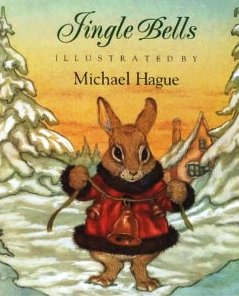
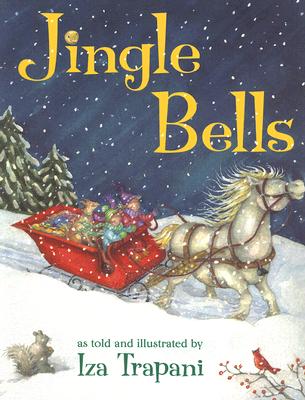
The song that we now know as Jingle Bells was originally titled "One Horse Open Sleigh". It was written in 1857 by James Lord Pierpont.
The chorus and the first verse are the most sung and best known part of the song.
Dashing through the snow
In a one horse open sleigh
O'er the fields we go
Laughing all the way
Bells on bob tails ring
Making spirits bright
What fun it is to laugh and sing
A sleighing song tonight

Oh, jingle bells, jingle bells
Jingle all the way
Oh, what fun it is to ride
In a one horse open sleigh
Jingle bells, jingle bells
Jingle all the way
Oh, what fun it is to ride
In a one horse open sleigh
The song has also inspired many illustrators. You can find an illustrated version of Jingle Bells that calls to you and your child.
Related Activites:
Make Jingle Bells.....
These simple bells made of egg cartons, pipe cleaners and jingle bells were found at Fantastic Fun and Learning.com check here for full directions
For a fancy wearable Jingle Bell Bracelet, use almost the same materials minus the egg carton and add a few fancy pipe cleaners. Spoonful .com has directions for three versions including the one below:
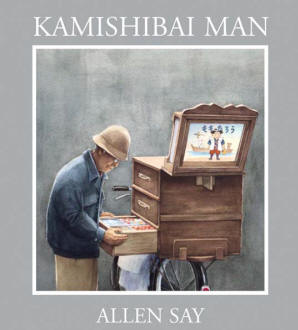
Kamishibai Man written and illustrated by Caldacott Award winner Allen Say is a beautifully drawn and told tale of a time when these special men plied their trade on the streets of Japan. Kamishibai pronounced kah-MEE-shee-bye, means "paper drama" in Japanese. Kamishibai was a popular form of street storytelling in Japan during the late 1920's until the early 1950's. The Kamishibai man was primarily a candy seller. He used storytelling to entice the children to his "store". He then entertained them with his stories. Kamishibai uses illustrated story cards that are slid into a wooden frame which serves as the "stage". The Kamishibai man frequently told the stories in serial form leaving his patrons with a cliffhanger ending which encouraged them to come see him the next time he came to their area.
Allen Say's Kamishibai Man is his way of remembering the kamishibai men of his childhood. A review of this book at Kamishibai.com says:
The following videos are very helpful in telling what Kamishibai is and in showing it used.
Story extension activity:
Have the children create their own Kamishibai story cards. They can draw pictures on regular paper and then glue them to the front of a piece of cardboard or card stock. You can then write the story action on the back of the cards.
Oh, John the rabbit ( Yes, Ma’am)
Ya got a mighty bad habit ( Yes, Ma’am)
Jumping in my garden ( Yes Ma’am) Eating all my cabbage (Yes Ma’am)
My sweet potatoes (Yes Ma’am)
My fresh tomatoes ( Yes Ma’am)
And if I live (Yes Ma’am)
To see next fall (Yes, Ma’am)
I ain’t gonna have (Yes Ma’am)
No garden at all ( Yes Ma’am)
John the Rabbit is a traditional African-American folk song. It falls in the category of Call and Response songs. Like echo songs, call and response songs requires the song leader and the group to take turns singing. But unlike echo songs, the group/children's sung response is different from the leader/teacher's part of the song.
This is a good video of kids singing John the Rabbit although you'll note that they have added their own verse in the beginning. The second verse is more like the original, traditional song.
The girls (and the teacher) are singing the "call" and the little boy is singing the "response". They have also added movements which you are always free to do. It makes the song even more fun.
Make a Salad using ingredients mentioned in the song or other vegetables normally found in a garden
Find or draw pictures of the items in the song (rabbit, tomatoes, cabbage, sweet potatoes, garden). You can also label the pictures and use them as flashcards.
Have the kids make up additional lyrics to the song.
Read classic rabbit stories: The Velveteen Rabbit, Beatrix Potter's Peter Rabbit etc.
Learn more rabbit songs. For example: Little Peter Rabbit
(to the tune of "Battle Hymn of Republic")
Little Peter Rabbit had a
fly upon his ear.
Little Peter Rabbit had a
fly upon his ear.
Little Peter Rabbit had a
fly upon his ear.
And he flicked it till it flew away!
June 4th is National Donut Day.
According to wikipedia:
National Donut Day is on the first Friday of June each year and follows on the Donut Day event created by the Salvation Army in 1938 to honor the women who served donuts to soldiers during World War. The holiday celebrates the doughnut (a.k.a "donut") — an edible, ring-shaped piece of dough which is deep-fried and sweetened.
In honor of National Donut day, I've naturally chosen a book about a donut. Arnie the Doughnut was written by Laurie Keller. It's a really fun and silly book that the kids will love. Here's the official book description:
Arnie is proud to be chocolate-covered, with bright-colored candy sprinkles. His first day on the planet is a big one. He is 1) cut into a ring 2) deep-fried 3) cooled 4) iced 5) sprinkled and 6) named Arnie. What he doesn't realize is that step 7 is being eaten by a human. So, when a customer, Mr. Bing, starts to put him in his mouth, he screams, "What are you doing?" Arnie is further crushed when he calls the bakery to warn the others only to discover that all the other pastries are "aware of this arrangement."
As you can see, Arnie is just the book to read on doughnut day. The kids will love the idea of a doughnut that doesn't want to be eaten.
The perfect activity to accompany this book is, of course, making doughnuts. The simplest way to make "donuts" with kids is to make Biscuit Donuts. I've made these with kids numerous times and they are always a big hit.
This is a good video about making Biscuit Doughnuts. A recipe follows the video.
Biscuit Doughnuts
ingredients:
2 cans of large buttermilk biscuits
oil for frying doughnuts
cinnamon sugar, sprinkles or icing to decorate
Directions:
Heat 2 inches peanut oil in a large pot or Dutch oven to 350 degrees F.
Lay out the biscuits on a cutting board
With a cookie or biscuit cutter, cut out a hole from the middle of each biscuit.
Fry the biscuit/donuts in the oil until golden. Use tongs to flip the donuts over.
Don't forget to fry the donut holes.
Drain the donuts and the holes on paper towels
Now you can sprinkle the donuts and holes with cinnamon sugar or put icing on them and decorate with sprinkles.
May is National Salad Month! (yep, we're almost finish with May holidays). This Tuesday's book is "I don't Like Salad!" a book written by Tony Ross. It is also linked with a tv show called Little Princess. No, I have never heard of the show either but the book is cute. It's official synopsis says:
The Little Princess has decided she doesn't like salad - especially tomatoes. But when she is given some seeds of her own and sees the first shoots of her tomato plant appear, she changes her mind!
The little Princess's attitude is one that a lot of kids and some adults will sympathize with. But in the end we all know (sorta) that veggies are good for you. I agree with the premise of the book that planting seeds and watching them grow is a good way to get kids to try a variety of veggies. Cooking is also a good way to get kids involved in what they eat.
I've given a recipe below for a salad, linked to another of my blogs that has a cute salad story and recipe and given a vid on making a salad with a fun name.
Ingredients:
1 cup granny smith apples, chopped
1 tablespoon lemon juice
1 cup celery, chopped
1/4 cup mayonnaise
1/4 cup raisins
1/4 cup walnuts
Directions:
1. Sprinkle chopped apples with lemon juice and mix together..
2. Add celery, raisins and walnuts.Stir together.
3. Add mayonnaise and stir, coating all of the ingredients.
4. Serve chilled.
May is National Photography or Photo Month. (yes, another holiday) Since the month is fast getting away from me, I'm putting up a ....Tada!...Friday Book Look! Click: A Book About Cameras and Taking Pictures was written by Gail Gibbons.
According to School Library Journal:
Gibbons takes a complex subject and breaks it down into simple, easy to understand terms. She describes different types of cameras and their film, and explains what happens to film inside the camera and at a photo-processing center. At this point, the author states, "First the film is removed from the cartridge in a darkroom, lit only by a red light. Then the latent images on the film are developed by soaking the film in chemicals." In fact, film must be removed in total darkness or it will be ruined; a red light will erase latent images. Explanations of printing, negatives and enlargements, tips on the care of a camera and on taking photos both indoors and outdoors are provided. A very basic chronology on the history of photography completes the presentation.
This book is a perfect lead up to making a Pinhole Camera.
Kids love to take pictures. There are many types of throwaway cameras available for children to experiment with. There are even cameras made especially for children. But a fun and educational way to learn about cameras and picture taking is to make a Pinhole Camera. A pinhole camera is a very simple camera with no lens that lets light in through a small pinhole which is what makes the picture. For the history and some of the science of Pinhole Cameras check with wikipedia.
A pinhole camera can be made with recycled materials that you have at home. If you really want to make a pinhole camera that will take a picture then you will need a few special materials:Resin-coated 5x7 inch black and white photographic paper, developing liquid and fixer. Because of the chemicals this is not a project that small children can do for themselves. For the special photography supplies check your local photography or hobby shop.
While a pinhole camera is basically a box with a tiny hole, there are many ways to make the camera. Here are a number of links showing different ways to assemble the camera. Highlight Magazine's Pinhole Camera is very simple and best for young children.
May is National Egg Month (I warned you that May was full of holiday) and I've found the perfect book for the Tuesday Book Look...yes, I know it's Thursday but like I said I have a lot of holidays to get in this month). Scrambled Eggs Super! written by Dr. Suess is classic Dr. Suess, full of nonsense, fun and animals with name we can't pronounce.
The hero of this book is our old friend Peter T. Hooper of the Cat in the Hat fame. Peter decides that his mom's scrambled eggs are too ordinary. He sets out to make the best scrambled eggs and to do that he needs eggs from all kinds of birds from all over the globe. The story is typical Dr. Suess...fun and silly. In the end, Peter makes the best eggs ever.
This book is the perfect set up for kids to learn to cook scrambled eggs. After a fabulous scrambled egg recipe, I've listed a few fun egg activities.
Super Scrambled Eggs
Scrambled eggs are great for breakfast, lunch or dinner. It just depends on what you add to the mix.
The video below is fabulous! The chef talks waaaay too fast (you may have to watch more than once) but I love what he has to say. Watch the vid then check out my list of add in suggestions.
Try some of these suggestions or let the kids make up their own Super Scrambled Eggs recipe.
cooked, crumbled sausage, diced sweet peppers and sage
Cooked, crumbled bacon, sliced mushrooms and sauteed chopped onions
chopped tomatoes and fresh leaf spinach torn into bite size pieces
sun dried tomatoes and feta cheese
scallions, sharp cheddar, sea salt & ground pepper
black forest ham and baby swiss cheese
nova lox, capers, sauteed red onions & cream cheese
chorizo sausage, green peppers, tomatoes and onions
crab meat and green onions
roast turkey, tomatoes, bacon and gruyere cheese
chopped black olives, roasted red peppers and feta cheese
Additional Egg Activities:
Art: String Egg Art: Wrap colored yarn or thread around a balloon to make these giant eggs or eggs of a variety of sizes depending on the size of the balloon. You can use all one color of yarn or a different color for each layer. All this craft requires is yarn, balloons and liquid starch or watered down white glue.
Science:
A chicken's egg is enclosed by a shell that has a high calcium content. The classic Rubber Egg Experiment requires taking a raw egg (shell still intact) placing it in a glass jar full of vinegar for 1 to 2 weeks and waiting for a reaction to take place. The acetic acid in the vinegar will dissolve the eggshell and the egg will bounce. The reaction will begin immediately when the egg is placed in the vinegar but will not be complete until at least 3 days but it works best if you wait longer.If you add food color to the vinegar the effect is really pretty.
The month of may is full of holidays.
May is National Hamburger Month (you'll notice that there are a lot of food holidays this month). So I decided to look for a good book about hamburgers...not an easy thing to do in picture books.
But then I found Burger Boy by Alan Durant. What a wonderful book!
The Booklist review say:
Burgers are the only thing Benny will eat. His mom warns him, "If you don't watch out, you'll turn into a burger!" One day he does. Dogs hound him, cows threaten him, and hungry kids chase him--despite his insistence that he is really a boy. When the owner of Bigga Burger picks him up in his van, Benny thinks he is safe--until he is put on display as a "giant, talking burger." Then it's Mom to the rescue; she takes him home and feeds him veggies, which, it turns out, Benny loves.
The pictures in this book are fun and colorful. The story is silly enough for the kids but with a lesson that adults will appreciate.
Great book! Interesting holiday....but not so easy to find activities for, well, other than cooking.
But I kept at it and found a Hamburger Craft where you make an artificial hamburger using styrofoam ball, craft foam and a few other simple materials...this site has good directions and a few pictures.
Craftster.org has a wonderful tutorial for making a cake that looks like a hamburger. The pictures and the directions are very detailed.
Of course, the most obvious activity for this books is to cook up a few hamburgers. The video below was made by the Junior Chefs of America. It's very well done and easy for the kids to follow and understand.
Yes! There really is a Pancake Day! Exciting, isn't it?! In honor of this day, which falls on Tuesday February 24th in 2009, I have collected bits of information on the history of Pancake Day and lots of links and a few fun pancake poems. (Oh!and checkout my Pancake folktale and Recipe at StorytellingCookingAndKids.blogspot.com )
Pancake Day is celebrated on Shrove Tuesday which is the day before Lent. Lent is a Christian holiday that was established in the 4th century as 40 days and is generally a period of fasting or other forms of self-denial. People generally eat a lot and have fun the day before Lent begins. Shrove Tuesday is often referred to as Pancake Day because fats, which were generally prohibited during Lent, had to be used up. People would take all the eggs and dairy products that they had left in their kitchens and use them to make delicious pancakes.
In the United Kingdom of Great Britian, Northern Ireland and several other countries around the world, Pancake Day is celebrated with fun, games, and of course a lot of eating. However, the most well known activity on this day is the Pancake Day race at Olney in Buckinghamshire, England which has been held since 1445. It all began when a woman was cooking pancakes on Shrove Tuesday to use up all of her perishables before Lent. While she was still cooking she heard the chiming of the bells summoning her to church. Not wanting to be late, the woman ran to church with her apron on and the frying pan still in her hand. Little did she know that this would start a tradition that would be around for over 500 years!
Only women are allowed to participate in this race. They must run a designated path with a frying pan and end up at the church. They must have a hot pancake in the frying pan which they must flip at least three times before they complete the race. The first woman to complete the race and arrive at church with the pancake is declared the winner. She then serves the pancake to the bellringer and is rewarded with a kiss from the bellringer called the “Kiss of peace”. This race still occurs in England and in several other cities. Info foundhere
Here are a few poems about pancakes:
The Pancake Collector by Jack Prelutsky
Come visit my pancake collection It’s unique in the civilized world I have pancakes in every description, Pancakes flaky and fluffy and curled
I have pancakes of various sizes Pancakes regular, heavy and light Underdone pancakes and overdone pancakes And pancakes so perfectly right
I have pancakes locked up in the closets have pancakes on hangers and hooks There are bags in boxes and bureaus And pressed in the pages of books
There are pretty ones sewn to the cushions And tastefully pinned to the drapes. The ceilings are coated with pancakes And pressed in the pages with crepes.
I have pancakes in most of my pockets And concealed in the lining of suites There are tiny ones stuffed in my mittens And large one packed in my boots
I have extra of most of my pancakes, I maintain them in rows on these shelves And if you say nice things about them You may take a few home for yourself
I see that you’ve got to be going Won’t you let yourselves out by the door? It is time that I pour out he batter And bake up a few hundred more
Pancake Song by Christina Rossetti
Mix a pancake, Stir a pancake, Pop it in the pan. Fry the pancake, Toss the pancake, Catch it if you can.
Pancake Poem by Shel Silverstein
Who wants a pancake, Sweet and piping hot? Good little Grace looks up and says, "I'll take the one on top." Who else wants a pancake, Fresh off the griddle? Terrible Teresa smiles and says, "I'll take the one in the middle."
Of course, I found a vid on Youtube! This one is odd but kinda fun. Enjoy!!
....and FYI, here's some information on the Different Types of Pancakes
BAO BING, PO-PING: The thin Mandarin pancakes served with Peking duck and moo shu pork. The cakes are made of fine wheat flour and boiling water, rolled thin and cooked two at a time.
BIN-JA TUK: Korean pancakes made from soaked mung beans. While the pancakes cook, strips of pork and kimchi are placed on top, then the cake is flipped.
BLINI: The savory, ultra-light pancake of Russia made traditionally with buckwheat flour and cooked in a small cast-iron pan. Blini are eaten hot with butter, herring, smoked salmon, chopped egg or caviar and sour cream. They date back to the Middle Ages
BLINTZ: The traditional pancake of Jewish cuisine is fried and rolled with sweet or savory fillings, such as lox or cinnamon and sugar and sour cream.
CREIER DE RITEL PANE: A Romanian dish of pancakes filled with mashed calves brains, onion, parsley and eggs. Once filled, the pancake is dipped in eggs and breadcrumbs and deep fried.
CREPE: The French pancake is, of course, the thinnest of them all. Sweet or savory, crepes can be street food or served in a five-star restaurant. Crepes Suzette, once the epitome of luxury desserts, is doused with liqueur and set afire.
DADAR GUTUNG: This Indonesian pancake is wrapped around coconut meat cooked in water with brown sugar and flavored with lemon juice and cinnamon, with a little salt.
EIERKUCKAS: A rich pancake from the Alsace Lorraine region of Northeastern France. The batter is mixed with red currant jelly and cream.
FLENSJES: A thick Dutch pancake served for dessert with sugar, ginger, jam or marmalade.
FLAESKPANNKAKA: This Swedish pancake is cooked until nearly set, then pork or bacon is laid on top and cooked until completed.
INJERA: This spongy, yeasted pancake-like bread made from millet flour doubles as food and utensil in Ethiopia. One or two injera are placed on a large tray and then covered with various stews. Diners scoop the stew with torn pieces of extra injera. Lastly, the injera bread that lines the tray, soaked through with stew juices, is eaten.
LATKE: In Jewish cuisines, the crisp potato pancake is eaten with sour cream or applesauce.
PALASCINTA: A thin Hungarian pancake similar to and used like a French crepe. Also popular in Austria.
PANNEKOEKE: The basic Dutch pancake might be small, filled with custard and served as dessert, or large with bacon cooked into it and dressed with molasses as an entree.
PIKELETS: A yeasted pancake with a holey surface in England. In New Zealand and Australia, the term refers to tiny pancakes that are served cold with preserves, whipped cream or lemon butter.
PLOYES: French Canadian sweet or savory buckwheat pancakes cooked on one side only.
POH PIA: In Singapore, these pancakes are served with a variety of filling, such as chicken or fried garlic, and sauces for diners to choose from.
QATA-EF: In Egypt and Syria, these pancakes are cooked on one side, folded over a sweetened cheese or nut filling, then deep fried. Medieval Arabic cookbooks mention this dish.
TORTILLA: A thin pancake-like flatbread made of cornmeal or flour and water that dates back thousands of years in Mexico and Latin American cooking.
Finally, in case you need/want more information, here are a few good links: